Swinging in the Dark: Britain's Winter Simulator Leagues Under the Spotlight
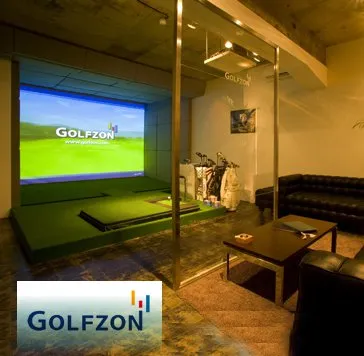
Photo: Golfzon manager, CC0, via Wikimedia Commons
There is a particular smell to a British clubhouse in November: damp waterproofs, chip fat and quiet resignation. The Saturday competition sheet has thinned, the temporary greens are in, and the fairways have taken on the consistency of badly set porridge. Into that gap has stepped the simulator.
This is not the solitary practice bay of a decade ago, tucked behind the pro shop and used mainly by one obsessive member with a launch monitor and a grudge against his own driver. The current model is organised: teams, fixtures, tables, promotion and relegation, and a finals night with a trophy that somebody has actually polished. Three contrasting venues, visited over successive weeks, suggest the winter league has become a genuine fixture of British club life. Whether it is a good one is a more interesting question.
A bay, a table and a Tuesday night
The first stop is a parkland club on the Cheshire plain, where two bays occupy a converted store room beside the swing studio. The technology is an overhead radar unit of the sort now familiar from tour vans, and the screen offers a choice of some two hundred courses, most of them American and several of them entirely fantastical.
The league runs on Tuesday evenings from October to March: twelve teams of four, a round-robin format, roughly ninety minutes per fixture. The arithmetic is modest. Bay hire is £24 an hour at member rates, split four ways, plus a one-off £20 league registration. Call it £8 a head per match, which compares favourably with a winter green fee on temporary greens in a sideways drizzle.
What the members talk about, though, is the clock. Ninety minutes, indoors, no queue on the first tee and no four-and-a-half-hour crawl behind a society. The bar does steady trade afterwards, which is more than can be said for a February medal. The club secretary is frank about the motive: the league was introduced to keep the lounge occupied and the tills ringing between Christmas and the start of the season.
The scepticism is equally frank. The club's better players, by and large, have not entered. Their objection is not to the technology but to the format: a nine-hole scratch-ish knockabout on a screen bears little relation to a medal round in a crosswind, and they suspect the league of being a social occasion wearing golf's clothes.
The city centre, where the pint is part of the model
One hundred and fifty miles north, the second venue is a converted warehouse with fourteen bays, a cocktail list, a shuffleboard table and a menu built around sourdough pizza. Peak bays run to £40 an hour; off-peak drops to £22. The Monday and Wednesday leagues cost £15 a head per night, which includes a drink.
The demographic is markedly different. The median age is lower, and a good proportion of the players do not belong to a golf club at all. Several have never held a handicap. They have come because a colleague suggested it, and they have stayed because the evening is enjoyable in a way that a windswept municipal course in January is not.
It is tempting, from the ramparts of traditional club golf, to dismiss this as a night out with a golf motif. The staff are disarmingly honest about the commercial logic: the leagues exist to fill the quiet nights, and the golf is real but the hospitality is the business. Yet the quality of play is better than expected. The tracking is accurate, the ball flight is honest, and the better players in the room are genuinely good.
The more interesting observation concerns the pipeline. Two of the league's regulars said they had since taken up outdoor golf, one joining a club and another playing pay-and-play through the summer. If the sport is worried about participation, a warehouse full of twenty-somethings on a Wednesday in February is not the worst place to find it.
Finals night, and the awkward matter of handicaps
The third evening is a regional final at a golf centre outside Birmingham in late October, where eight teams contest a trophy, a fourball at a nearby resort and a £400 voucher. The format is nine-hole fourball betterball on a simulated coastal course, with handicaps converted through the operator's own algorithm.
This is where the mild scepticism hardens into a real question. Simulator handicaps are, in most league structures, self-declared and adjusted after three rounds. The operator argues that a small closed league polices itself, and to some extent it does; everyone knows everyone, and a ringer is spotted quickly. But the incentive to arrive in October with a convenient number is obvious, and not every league is as tight-knit as this one.
There is a further issue that club handicap committees are beginning to raise. Rounds played on simulators do not, in general, count for the World Handicap System in Great Britain and Ireland. A winter league handicap is therefore a parallel currency, and when April arrives some players return to the medal tee with a number that has drifted some way from reality. One committee secretary told me his club had begun asking league organisers for scoring records, a request that has not always been received warmly.
Does any of it travel outdoors?
The evidence on improvement is anecdotal, and the honest answer is that it depends entirely on how the time is used. A launch monitor that reports club path, face angle and strike location is a genuine coaching tool, and professionals are broadly enthusiastic about the data. A nine-hole league match, by contrast, is practice of a narrow and forgiving kind.
Putting is the weakest link. A mat with a fixed pin and a consistent stimp reading teaches nothing about reading a green or judging a borrow. Chipping off artificial turf bears little resemblance to the real thing, and limited-flight setups can flatter a player whose slice is quietly being contained by a screen that does not punish it. One professional I spoke to was blunt: he had seen measurable gains in driver dispersion among members who used the bay for deliberate practice, and none at all among those who merely played the league.
A wary accommodation
The winter simulator league is neither the future of competitive club golf nor a passing novelty. It is something more mundane and more useful: a fixture, with the same mixture of virtues and compromises as any other winter arrangement. It keeps clubs solvent, keeps players swinging and keeps the bar open. It will not produce a better golfer by itself, and it will not replace the Sunday medal, which remains the only honest test most of us have.
But a sport that loses four months of the year to the weather ought to be pragmatic about what fills them. The clubs that have embraced the format with clear rules, published handicaps and a firm grip on the social side appear to be getting the best of it. Those treating it as a revenue tap and a novelty will find, as with most shortcuts, that the returns diminish.