Cold Front: Seven Winter Balls Assessed for Britain's Wet Months
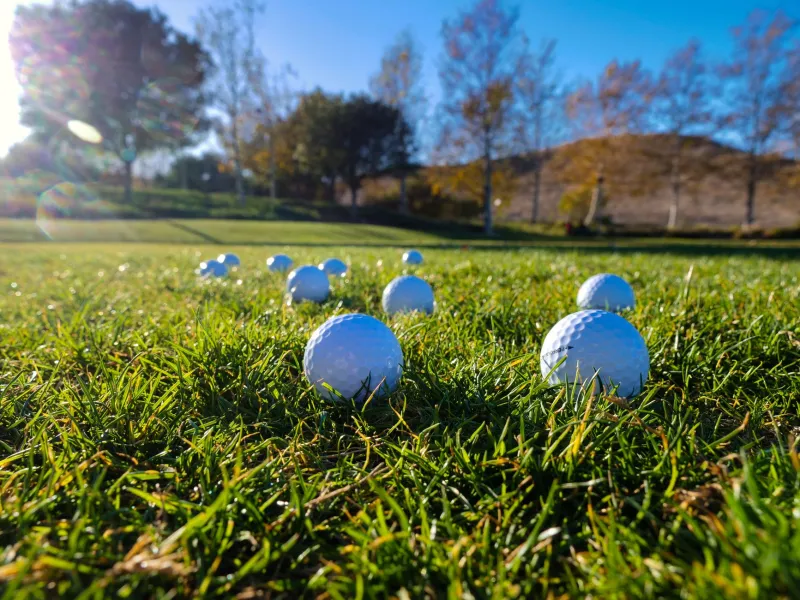
Winter golf in Britain rarely asks a ball to do anything glamorous. It asks it to feel tolerable at 6°C, to hold its line in a crosswind, to stop on a green that has not seen sun for a week and to survive eighteen holes of wet rough without looking as though it has been used to clean a shed. With that in mind, Golf International gathered seven balls for a 2026 cold-weather test: three premium urethane models, three value two-piece designs and one mid-priced urethane ball. We anonymised them for the launch-monitor phase and rotated them across two on-course sessions, one at a Kent links and one at a Surrey parkland course.
How the test was conducted
All seven balls were tested indoors at 12°C with a driver and a 7-iron, using a launch monitor, with three testers of handicaps 4, 12 and 20. We then played each ball for at least nine holes in damp, windy conditions between 4°C and 9°C. We measured carry distance, spin, peak height and descent angle, and recorded subjective feel, wind behaviour, greenside control and durability. Prices are per dozen and reflect UK retail pricing at the time of testing.
| Ball | Type | Price | Driver carry | 7-iron spin | Winter character |
|---|---|---|---|---|---|
| A | Premium urethane | £52 | 221 yd | 6,950 rpm | Soft, high-spin, superb around greens; scuffs early |
| B | Premium urethane | £48 | 224 yd | 6,400 rpm | Firmer, lower-spin, best into wind; durable for a premium ball |
| C | Premium urethane | £55 | 219 yd | 7,300 rpm | Softest of the group; lovely on slow greens, shortest off the tee |
| D | Value ionomer | £24 | 216 yd | 5,600 rpm | Clickier feel; robust and consistent |
| E | Value ionomer | £20 | 218 yd | 5,300 rpm | Long in the cold; hard feel; low greenside spin |
| F | Value two-piece | £18 | 213 yd | 5,100 rpm | Cheapest; very durable; least responsive around greens |
| G | Mid-priced urethane | £30 | 220 yd | 6,100 rpm | Best compromise of spin, feel and price |
Against a summer benchmark of 232 yards driver carry for the same testers, every ball lost between 8 and 15 yards. That is not a ball failure; it is physics. Cold air is denser, muscles are stiffer and fairways are wet. The best winter balls did not eliminate the loss, but they made it easier to live with.
Premium models: feel versus durability
Ball A was the most satisfying from 100 yards and in. Its soft cover and high spin gave the testers confidence on firm, slow greens, and it checked predictably on short pitch shots. The trade-off was durability: after a dozen wedge shots in wet conditions, the cover was visibly marked. Ball B was firmer and lower-spinning, which made it the best of the premium trio into the wind. It did not stop as quickly as A, but it held its line and resisted scuffing better. Ball C was the softest and highest-spinning model, a pleasure on and around the greens, but it was also the shortest off the tee and the least stable in a strong crosswind. For better players who value control over raw distance, A and B make sense; C is a specialist choice for calm, soft days.
Value models: distance and durability
The value group showed why winter golf is not simply a premium-ball market. Ball D was the most consistent of the lower-priced models, with a firm, clicky feel and a low, penetrating flight. It lacked the greenside bite of the urethane options, but it was tough and predictable. Ball E was the longest of the seven in the cold, largely because its low spin reduced the effect of wind, but its hard feel and limited short-game control will not suit everyone. Ball F was the cheapest and most durable, a sensible choice for a wet winter medal or a golfer who loses balls in heavy rough, though it offered little help around the greens. Ball G was the surprise of the test: a mid-priced urethane ball that gave most of the short-game control of the premium models without the premium price. It was not as long as B or E, but it was close enough, and it resisted scuffing better than A and C.
On the course: links and parkland
On the Kent links, wind was the deciding factor. B and G produced the most stable flight, while C ballooned in the stronger gusts and lost ground. The value models D and E also performed well in the wind, though their firmer feel was less pleasant in cold hands. On the Surrey parkland course, where greens were soft and receptive, A and C came into their own. Their higher spin helped the ball stop, and their softer feel was welcome on long putts. The value balls released more on chips and pitches, which required an adjustment from testers used to urethane covers. Durability told a similar story: the premium balls showed more wear after wedge play, while the value models emerged from eighteen holes looking almost new.
Recommendations by handicap and budget
For low handicappers (0-8), Ball B is the best winter all-rounder: stable in wind, durable enough for practice and still capable of controlled spin. Ball A is the choice for players who prize greenside feel above all else. For mid handicappers (9-18), Ball G is the clear recommendation. It offers a sensible balance of spin, feel and price, and it will not punish the occasional thin wedge. For higher handicappers (19 and above), Ball E or D makes more sense: both prioritise distance and durability, and both are easier to justify at winter prices. On a tight budget, Ball F is the value pick, provided the player accepts limited short-game spin. The best overall ball in this test was G, with B a close second for stronger players.
Winter golf also rewards common sense. Keep spare balls in a trouser pocket rather than in a cold car boot, rotate two balls on wet days and do not expect any ball to perform like a summer model in January. The right winter ball will not make the cold disappear, but it can make the round feel considerably less like a penance.