Clubs in Transit: Europe's New Border Rules and the 2026 Golf Trip

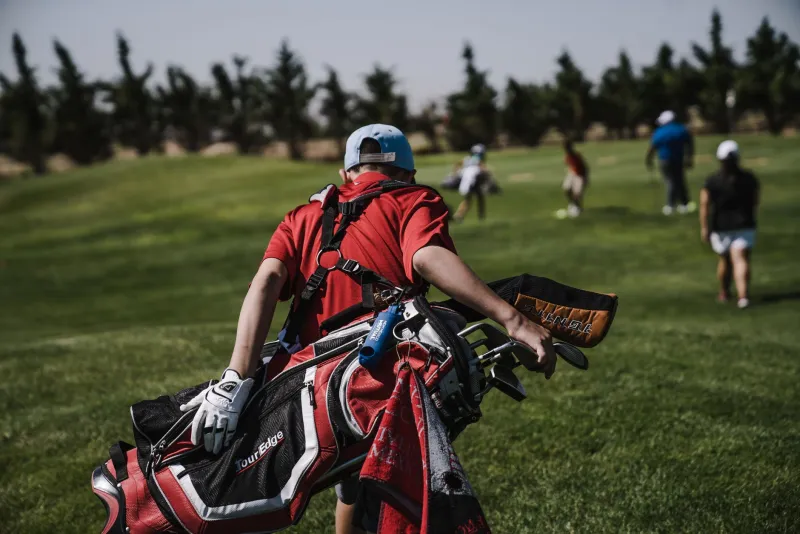
Photo: This photo was taken by Anton Zelenov. Please credit this with : Photo : Anton Zelenov in the immediate vicinity of the image. If you use one of my photos, please email me (account needed) or leave me a short message on my discussion page. It would
The European golf break has long been sold on ease: a short flight, a hire car, a set of clubs in the hold and a tee time before dinner. That promise has not disappeared, but the border has acquired a new vocabulary. Entry and Exit System kiosks, ETIAS authorisations and customs declarations are now part of the planning conversation, and British golfers are entitled to ask a simple question: what does any of this actually require of me?
The answer is less dramatic than some headlines suggest, but it is not nothing. The golfer who arrives at Faro or Malaga with a passport, a boarding pass and a vague memory of a handicap certificate may find the first hour of the trip slower than expected. The golfer who has done a little preparation will notice very little difference at all.
What has actually changed
The most significant change is the Entry and Exit System, or EES. Since October 2025 it has been introduced progressively at Schengen borders, replacing the traditional ink stamp with an electronic record of the traveller's name, travel document, facial image and fingerprints. The system is intended to record entries and exits more accurately and to identify overstayers. Full operation across the Schengen area is expected by spring 2026.
For a British golfer on a week-long trip to Spain, Portugal, France or Italy, the practical effect is a one-off registration at first entry. That registration is then valid for three years, or until the passport expires. Subsequent crossings should be quicker, because the border officer can verify the record electronically rather than starting from scratch.
It is worth being precise about geography. EES applies to the Schengen area, not to every country in Europe. Ireland is outside Schengen and remains covered by the Common Travel Area, so a golf trip to Kerry or Donegal does not involve EES at all. Nor does a domestic break in Scotland, Wales or England. The new bureaucracy is specific to the continental crossing.
The first crossing is the slow one
Airports and ferry terminals have been preparing for EES for years, but preparation is not the same as capacity. The first registration takes longer than a stamp, and terminals with limited space, such as some smaller regional airports, may see queues at peak times. Travellers who have allowed two hours for a hire-car pickup should perhaps allow a little more on their first EES crossing.
The same applies at the Channel ports. Ferry passengers and Eurotunnel travellers may encounter kiosks or tablet-based registration before boarding, and coach groups may be processed collectively. For golf societies travelling in a minibus, it is sensible to check the operator's advice in advance and to ensure that everyone has the same documentation to hand.
This is friction, not obstruction. The golfer who arrives with a valid passport, a clear idea of the return date and a little patience should encounter no difficulty. The days of the simple stamp are ending, but the days of the golf trip are not.
ETIAS: not a visa, but not nothing
Separate from EES is the European Travel Information and Authorisation System, or ETIAS. It is an online authorisation for visa-exempt travellers, including British citizens, and it is not a visa. It will involve a short application, a fee of €20 for adults, and a validity period of three years. Travellers under 18 and over 70 are exempt from the fee.
ETIAS has been scheduled to come into operation in late 2026, with a transitional period expected before it becomes mandatory. As of November 2026, travellers should check the official European Union website for the exact start date rather than relying on second-hand reports. The application itself is designed to be straightforward, but it must be completed before travel, and airlines and ferry operators may ask for proof at check-in.
The important point for golfers is that ETIAS is not a golf-specific hurdle. It does not ask for a handicap, a tee time or a club membership number. It asks for identity, passport details and travel intentions. A five-minute application online is a more accurate description than a bureaucratic ordeal.
Clubs through customs
Golf clubs attract attention because they are large, expensive and sometimes carried in numbers. But a British golfer taking one set of clubs to Europe for personal use is not engaging in a complex customs operation. Personal sports equipment can generally be taken temporarily without a carnet, provided it is for private use and will return with the traveller.
Problems tend to arise when the picture is less clear. A traveller carrying two or three sets, or clubs belonging to friends, may be asked to explain why. A golfer carrying clubs for sale, or expensive new equipment still in its packaging, may be treated as importing goods rather than travelling with personal possessions. The remedy is simple: keep receipts for high-value items, be ready to explain that the clubs are for personal use, and avoid turning a golf trip into an informal delivery service.
It is also worth checking baggage cover before departure. Airline compensation for delayed or damaged golf clubs is limited, and travel insurance policies vary considerably in how they treat sports equipment. The border is not the only place where a set of irons can go missing.
Proving your handicap
A more common source of quiet anxiety is the handicap certificate. Some European clubs and rental desks ask for proof of handicap, particularly at courses with a reputation for difficulty or at busy resorts where the starter wants to keep play moving. A World Handicap System index, accessible through the England Golf, Scottish Golf, Wales Golf or Golf Ireland platforms, is usually sufficient. A printed certificate or a clear screenshot is sensible, because mobile signal and battery life are not guaranteed.
The Central Database of Handicaps number is also useful. It allows a club to verify the index directly, and it avoids the awkward conversation that follows a lost PDF. Golfers who do not hold an official handicap should check the rental company's policy before booking, because some desks will hire clubs without one while others will not.
The domestic dividend
The cumulative effect of EES, ETIAS and the general tightening of border procedures is unlikely to stop British golfers from travelling to Europe. It may, however, tilt the arithmetic towards domestic and ferry-led breaks, particularly for shorter trips. A weekend in Scotland or Wales involves no biometric registration, no online authorisation and no customs conversation. A ferry to Ireland involves no EES at all, because Ireland is outside Schengen.
The continental golf break will remain popular, and rightly so. But the extra friction gives the domestic market a stronger case than it has had for years, especially for the golfer who values a quick departure over a cheap green fee. The border is not closing. It is simply asking for a little more preparation.
A club golfer's checklist
Before booking, check the passport's validity and the current EES and ETIAS position on the official EU website. Apply for ETIAS when it becomes available if your travel date falls after the transitional period. Carry a printed handicap certificate and know your CDH number. Keep receipts for expensive clubs. Confirm the airline's baggage allowance for golf equipment and check that your travel insurance covers it. Allow extra time at the first Schengen crossing. And if the trip is short, ask whether a domestic or Irish alternative might deliver the same golf with less paperwork.
The European golf trip is not becoming difficult. It is becoming more formal. For the prepared golfer, that is a small price to pay for a week on foreign fairways.