Berths and Birdies: Three Sleeper-Train Golf Breaks from London
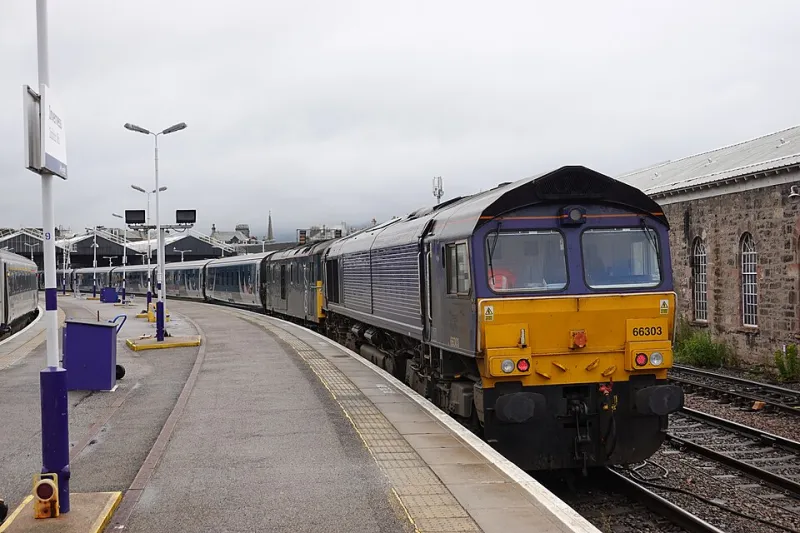
Photo: Foulger Rail Photos from Basingstoke, UK, CC BY-SA 2.0, via Wikimedia Commons
The sleeper train is not the fastest way to reach a golf course, but it may be the most civilised. You leave London after dinner, sleep through the long drive, and arrive with a clear head and a full day ahead. For golfers who have grown tired of the M6 at dawn or the early flight to Inverness, the appeal is obvious. The catch is that sleeper services are not designed around golf bags, and the last leg to a links course often needs as much planning as the tee time itself. What follows are three practical itineraries using the Caledonian Sleeper and the Night Riviera, with indicative fares, luggage notes and the logistics that matter.
1. The Highland Sleeper to Royal Dornoch
The Caledonian Sleeper leaves London Euston in the evening and reaches Inverness in the morning. From there, the railway does not run to Dornoch itself; the usual route is a ScotRail service to Tain, followed by a short taxi ride across the Dornoch Firth. The connection is not difficult, but it is not turn-up-and-go either. Book the train and the taxi in advance, and allow at least an hour between the sleeper’s arrival and the local service.
Royal Dornoch is the headline. The Championship Course is a classic links, and visitor tee times are available through the club’s booking system. The Struie Course is the sensible second round if you are staying a night. A midday tee is the most realistic target on arrival day; it leaves time for breakfast, the transfer and a stop at the clubhouse. The club can usually store bags, but do not assume a changing room will be free at peak times.
Fares vary by cabin and demand. A reclining seat on the Caledonian Sleeper can start at around £55 one-way, while a Classic room is typically £170–£250, with en-suite rooms higher. Book well ahead for spring and summer. Luggage is the main constraint. A soft golf travel cover is easier to stow than a hard case, and a single suitcase plus clubs is manageable in a cabin. If you are playing two courses, consider a bag-transfer service or shipping clubs ahead; the sleeper is not a luggage van.
2. Nairn by Night
Nairn is the easier Highland option. The same Caledonian Sleeper reaches Inverness, and then a ScotRail service runs along the coast to Nairn in about twenty-five minutes. From Nairn station, the town and the golf clubs are a short taxi ride or a brisk walk, depending on where you stay. That simplicity makes Nairn a good first sleeper golf break.
The town has two courses worth planning around. Nairn Golf Club is the championship links, with a demanding back nine and a visiting timetable that rewards early booking. Nairn Dunbar is the friendlier alternative, and a good second round if the weather turns. The practical advantage of Nairn is that you can arrive in the morning, leave your bag at the hotel, and still make a late-morning tee. Most hotels will hold luggage before check-in, but confirm when you book.
Fares mirror the Dornoch route, since it is the same train. The difference is the last leg: Nairn requires no taxi across a firth, which reduces the risk of a missed connection. Tee-time logistics are therefore simpler. Book a tee after 10:30 if you are arriving by sleeper, and keep the first day light. A second day gives you the chance to play both courses without rushing. The sleeper returns south overnight, so a two-night stay is more comfortable than a single night.
3. The Night Riviera to St Enodoc
For south-west golf, the Night Riviera runs from London Paddington to Cornwall. The useful stop for St Enodoc and Trevose is Bodmin Parkway; from there, a taxi to Rock or Wadebridge takes around half an hour. The service also continues to St Erth for West Cornwall, which is a better base if you want to play the Lelant links. The Night Riviera is a smaller, more intimate train than the Caledonian, and the cabins are compact.
St Enodoc’s Church Course is the main attraction: a links of real character, with blind shots and a churchyard that has to be seen to be believed. Visitor times are available, but the course is popular in summer. Trevose is the other sensible round, and the two make a good pair. A morning tee is possible if you take an early breakfast and pre-book a taxi from Bodmin Parkway. Do not rely on a local bus with a golf bag.
Fares on the Night Riviera are often lower than the Highland sleeper. A seat can start at around £45 one-way, and a cabin is typically £95–£150, depending on demand and berth type. GWR allows luggage, but space is limited. A golf bag should travel in a cover, and you should be prepared to store it in the luggage rack rather than in the cabin. If you are travelling as a pair, a twin cabin makes the luggage problem easier.
The practical checklist
Book the train and the first tee together, not separately. Allow a buffer of at least two hours between arrival and a tee time, longer if a ferry or taxi is involved. Confirm that your hotel will store clubs before check-in. Use a soft travel cover, label the bag, and keep a spare pair of shoes in your suitcase in case the clubs are delayed. Check the operator’s luggage policy before booking, and reserve a cabin rather than a seat if you are carrying clubs. Finally, remember that sleeper trains are not package holidays: the romance is real, but the logistics are yours to manage.
For the British club golfer, that is a fair trade. A night on the train turns a long journey into part of the trip, and a links course at the end of it feels all the more earned. In 2026, with fuel costs and airport queues both uncertain, the sleeper is not just a novelty. It is a sensible way to play golf.